Microsoft AI Foundry is a unified platform for building, deploying, and managing AI applications and agents. It consolidates model access, agent orchestration, monitoring, and governance in one place — production-grade infrastructure without managing the underlying compute.
The architecture has two layers: a Foundry resource (the Azure-side container that holds billing, IAM, and regional configuration) and a Foundry project (the workspace where you actually deploy models, build agents, and configure tools). One resource can contain multiple projects.
Resource Setup — jenn-foundry-dev
Created the Foundry resource jenn-foundry-dev in December 2025 under the Azure for Students subscription. Resource group: rg-foundry-dev. Region: East US. API key authentication enabled.
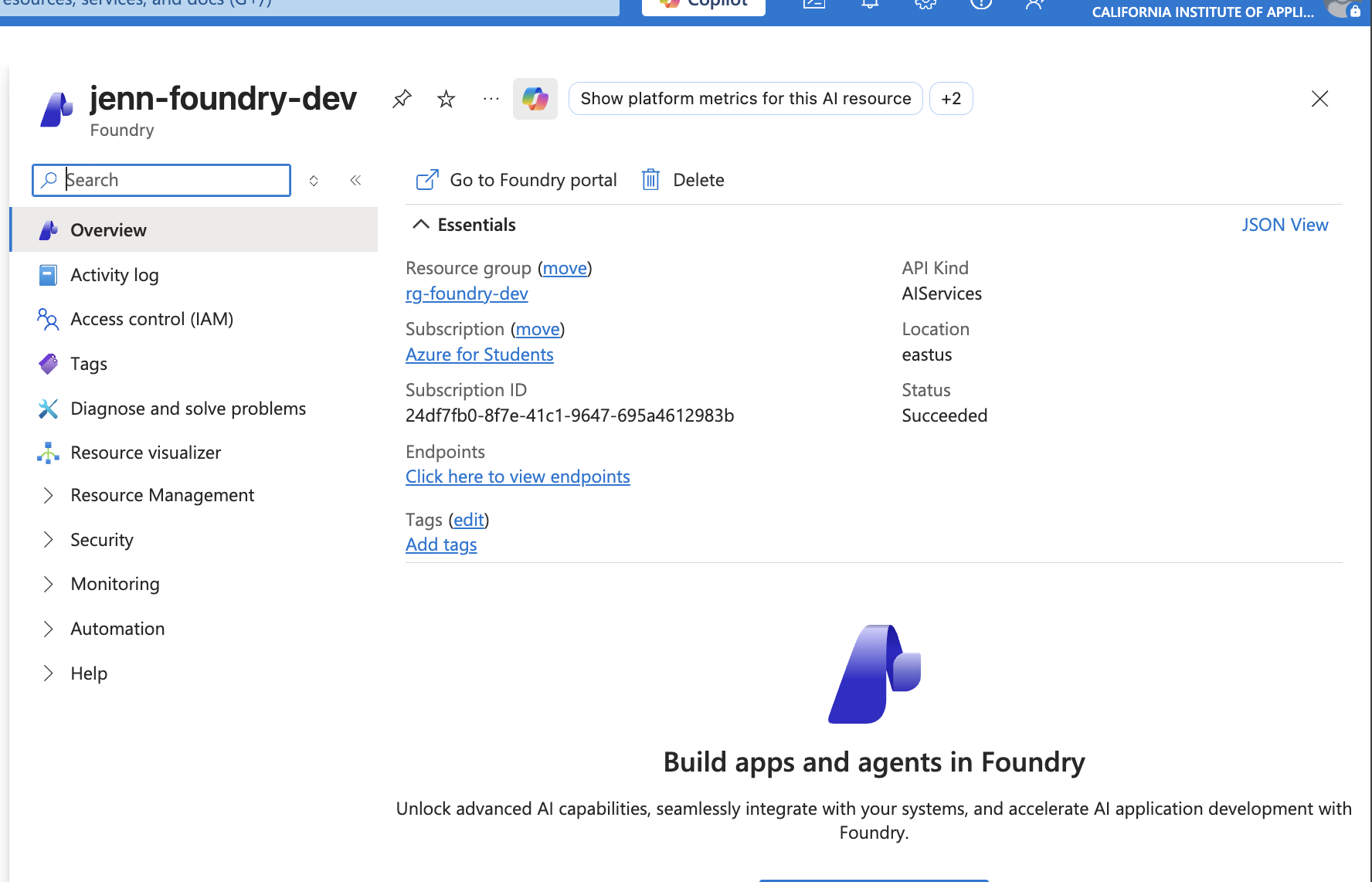
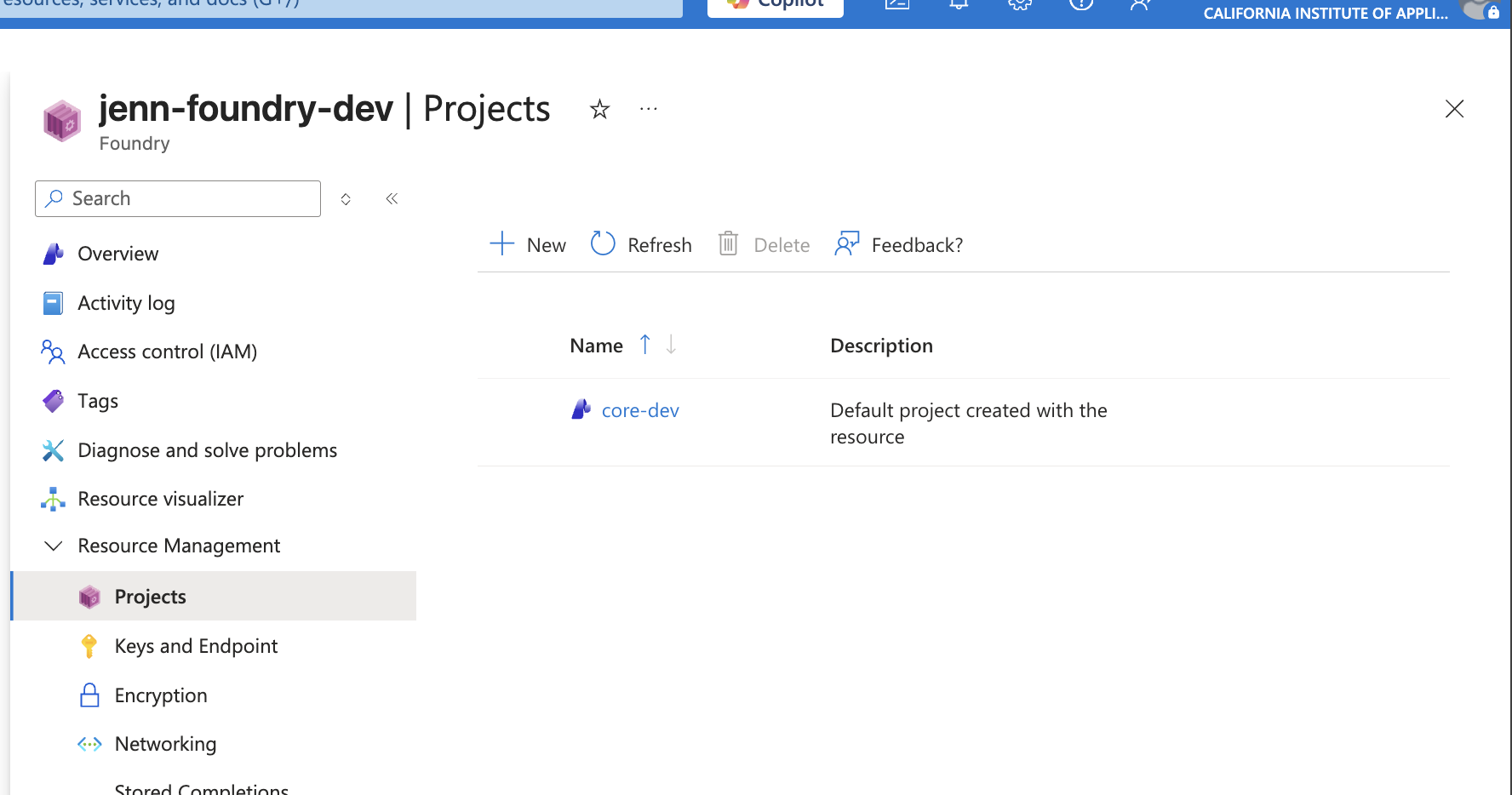
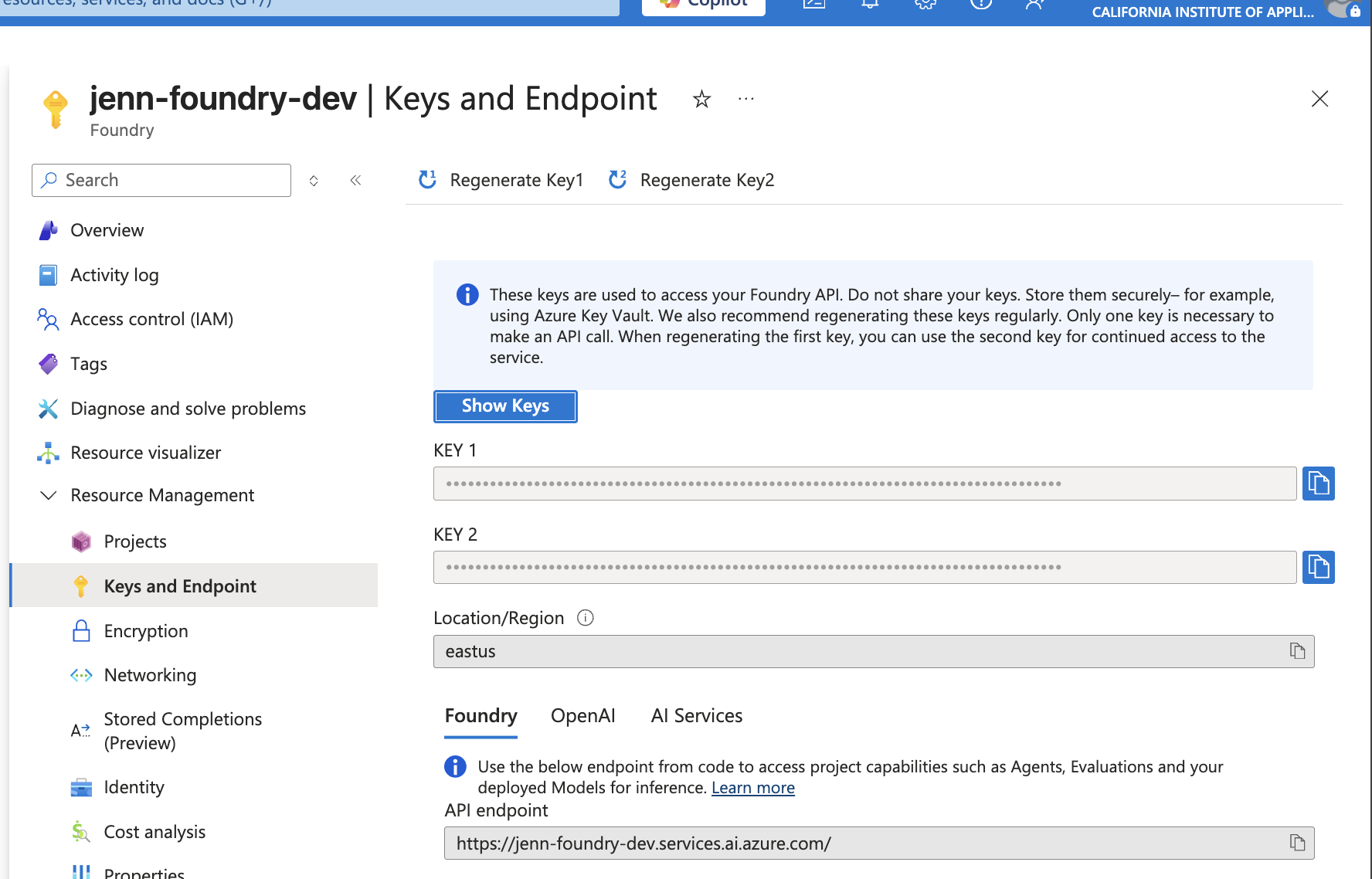
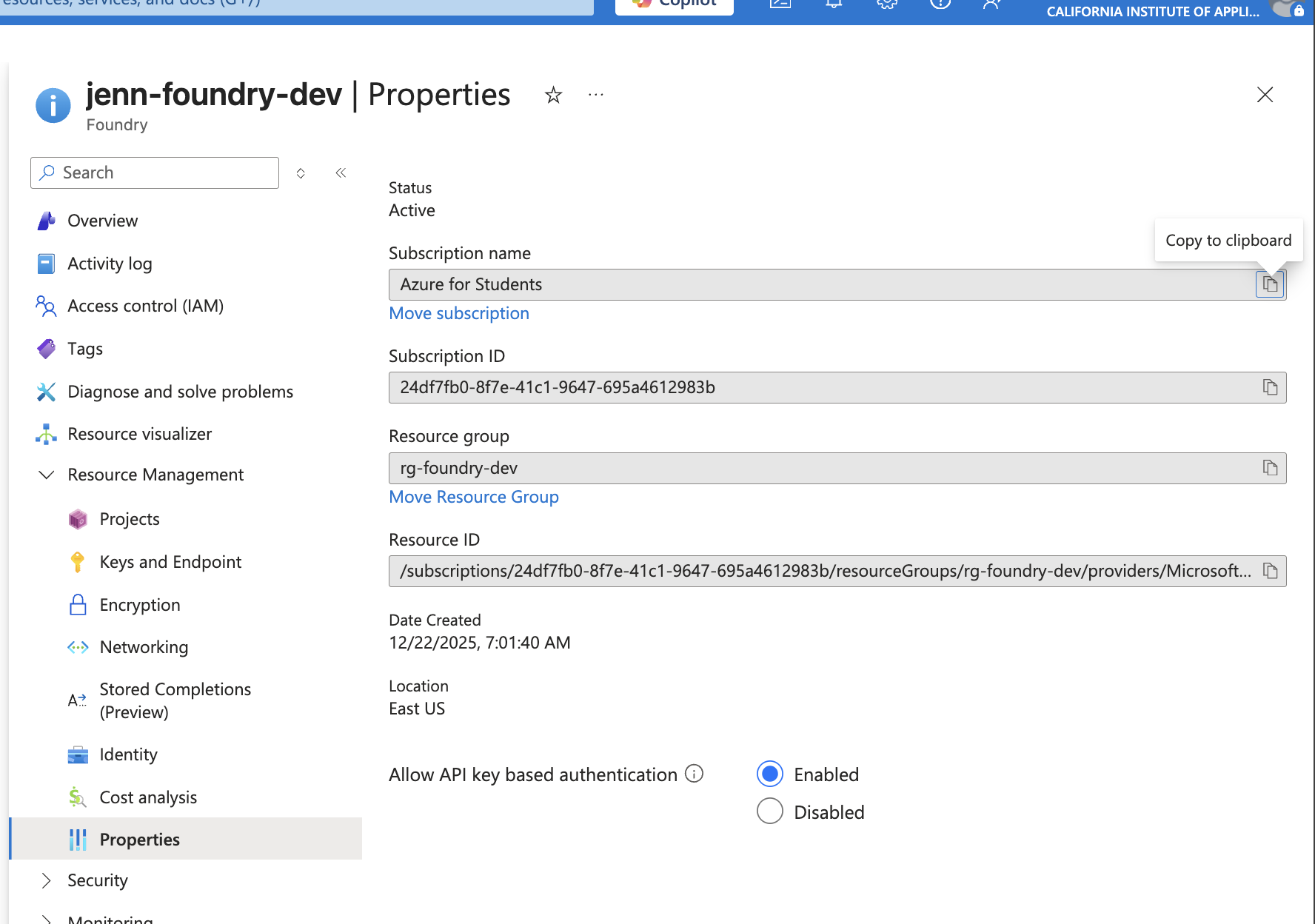
The sidebar shows the full resource management surface: Projects, Keys and Endpoint, Encryption, Networking, Stored Completions (Preview), Identity, Cost Analysis. Stored Completions in preview is worth watching — it's the mechanism for logging and reviewing model outputs at the resource level, which has obvious security and compliance implications.
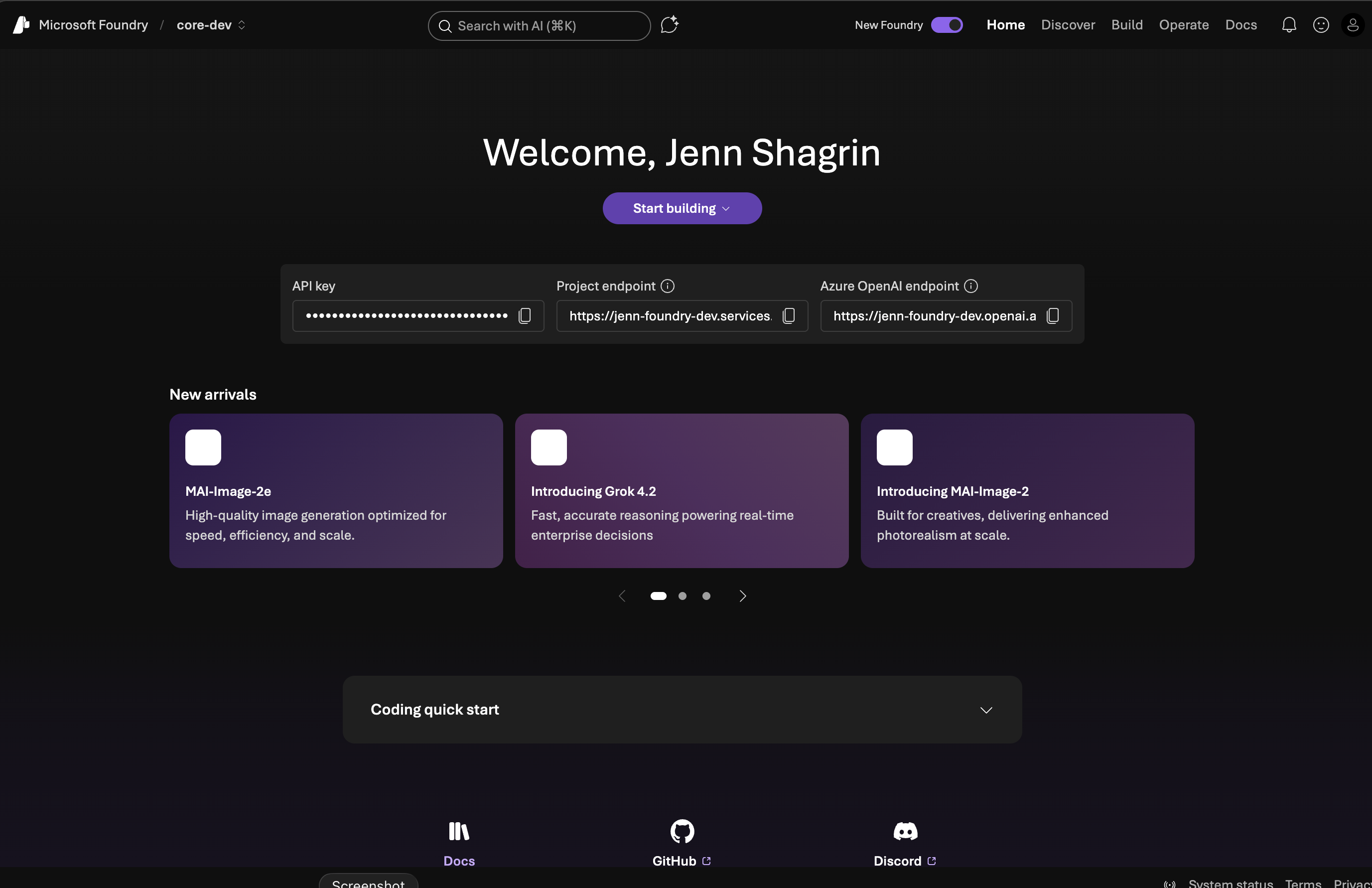
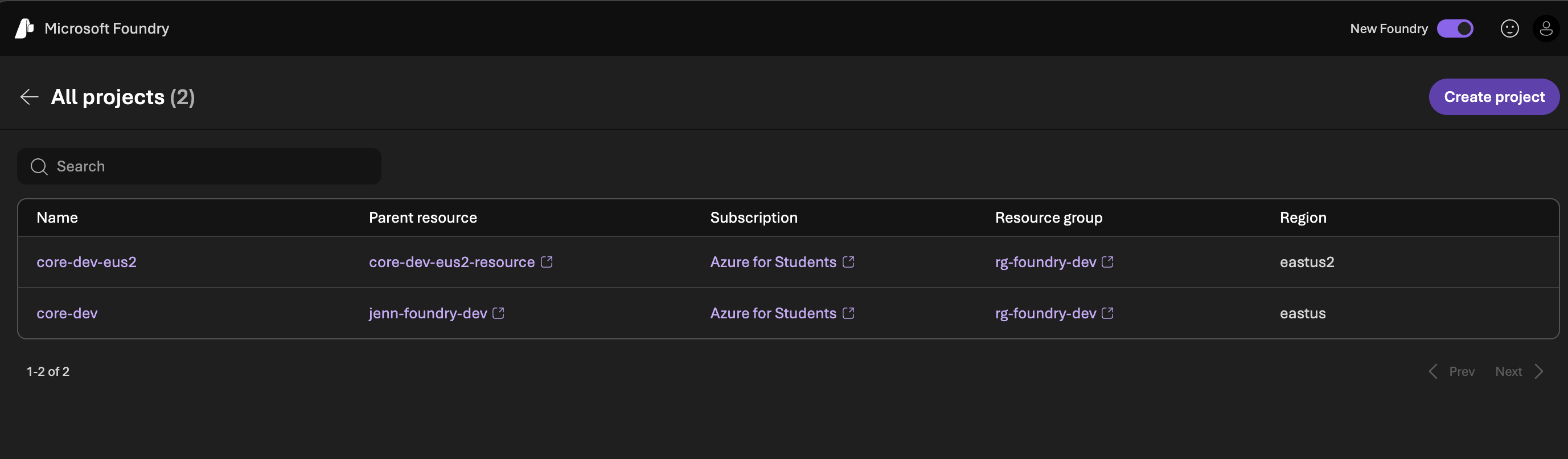
Project Setup — core-dev-eus2
Created the Foundry project core-dev-eus2 within the resource. Projects are where models get deployed and where the actual API endpoints live.
The model catalog includes first-party Azure OpenAI models (GPT-4o, o1, o3, o4-mini, GPT-4.1 series), open-source options (Meta Llama, Mistral, Phi), and partner models (Anthropic, Cohere, AI21). Everything deployable from the same interface with unified billing and IAM.
GPT-4o Deployment
Deployed gpt-4o as a GlobalStandard deployment — meaning requests can route across Azure regions for capacity rather than being pinned to a single datacenter. Provisioning state: Succeeded.
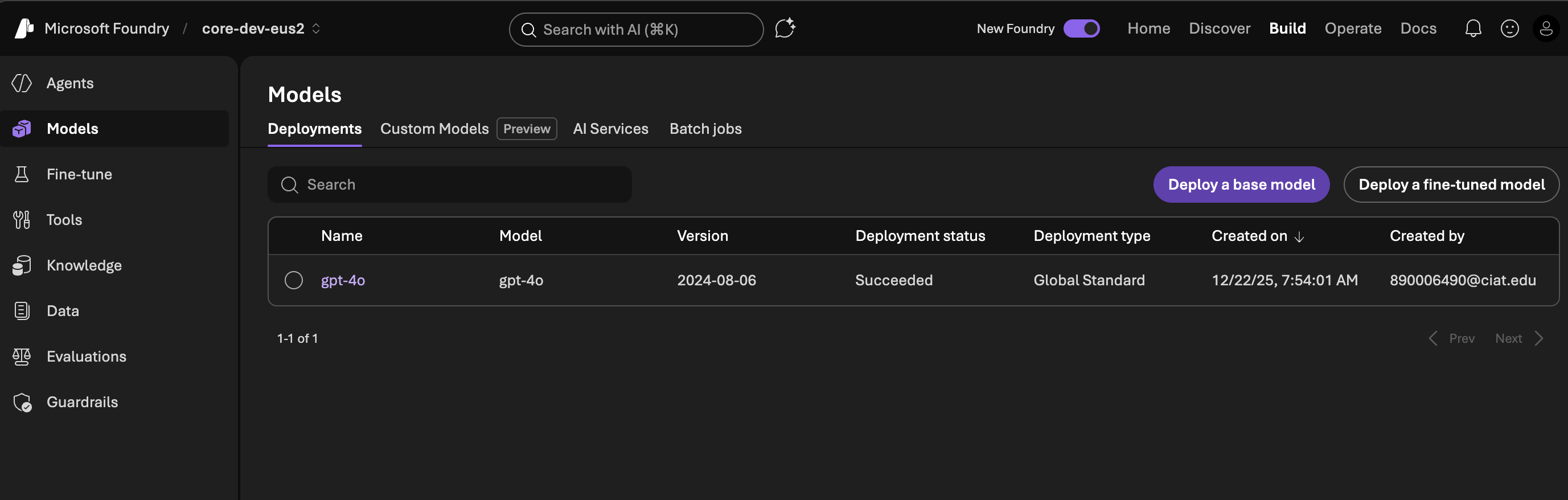
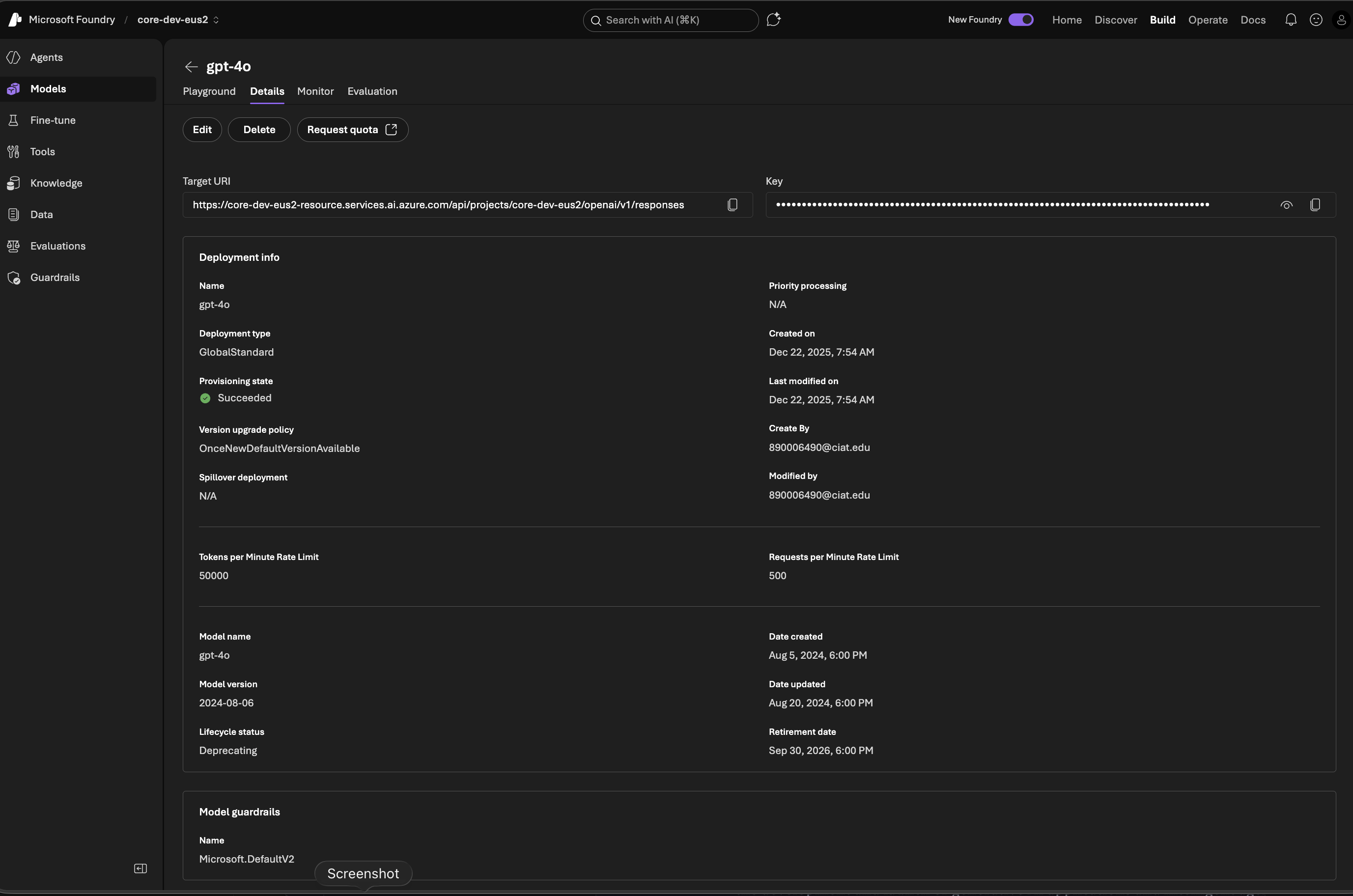
Deployment configuration:
- Model: gpt-4o, version 2024-08-06
- Deployment type: GlobalStandard
- Rate limits: 50,000 tokens/minute, 500 requests/minute
- Version upgrade policy: OncNewDefaultVersionAvailable
- Lifecycle status: Deprecating — retirement date Sep 30, 2026
The retirement date is worth flagging. Version 2024-08-06 is on the deprecation path. The upgrade policy means it will auto-update to the next default version when available rather than requiring manual redeployment — useful for keeping a dev environment current without active maintenance.
Guardrails Configuration
Guardrails are applied at the model deployment level and control what content the model will generate or accept. Two guardrails configured on the GPT-4o deployment:
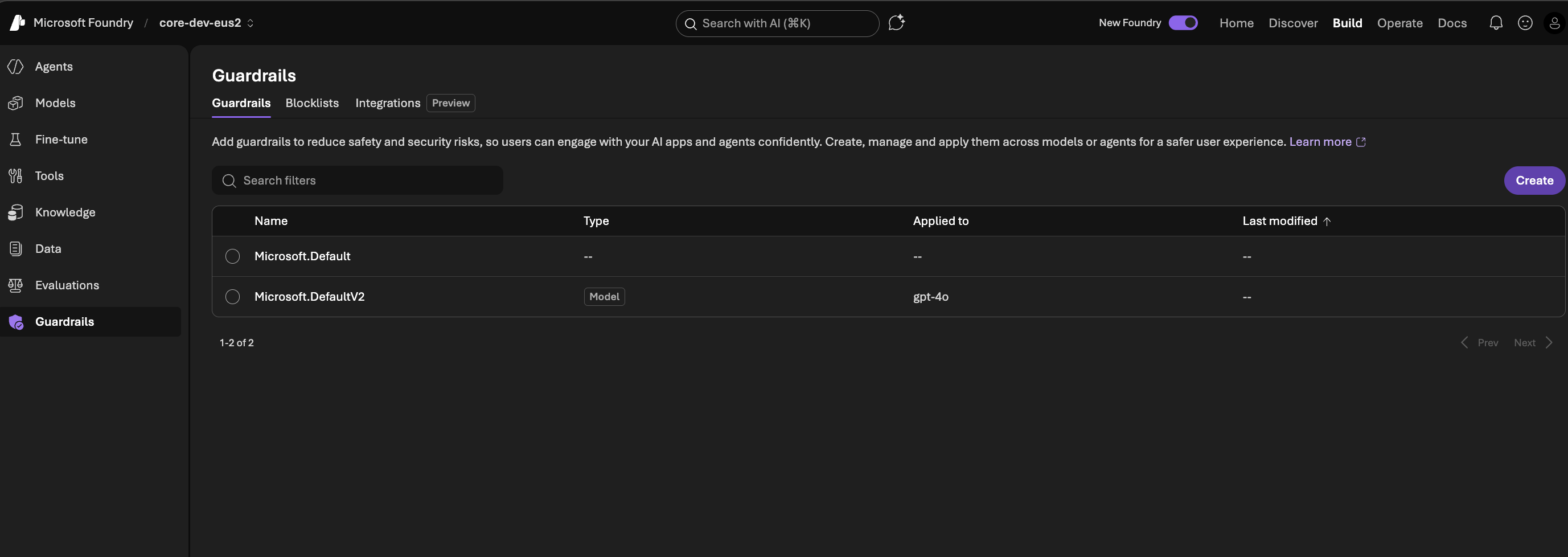
- Microsoft.Default — baseline content filtering across hate, violence, sexual, and self-harm categories
- Microsoft.DefaultV2 (applied to gpt-4o) — updated version of the default policy with additional coverage
The Guardrails panel also shows Blocklists and Integrations tabs — the blocklist feature allows custom keyword or pattern filtering on top of the default policy, and Integrations connects guardrail behavior to external monitoring systems. Neither was configured here beyond the defaults.
From a security perspective, guardrails are the content security layer for AI applications. They're the difference between a model that will and won't generate harmful output on request — and in an enterprise deployment, getting this configuration wrong has the same kind of blast radius as a misconfigured WAF.
Resource Summary
Foundry resource:  jenn-foundry-dev
Resource group:    rg-foundry-dev
Subscription:      Azure for Students
Region:            East US
Created:           December 22, 2025

Project:           core-dev-eus2
Model deployed:    gpt-4o (version 2024-08-06)
Deployment type:   GlobalStandard
Rate limits:       50k TPM / 500 RPM
Guardrails:        Microsoft.Default, Microsoft.DefaultV2
Auth:              API key enabled